The Question Beneath the Question
A note on why the first question is rarely the real one.
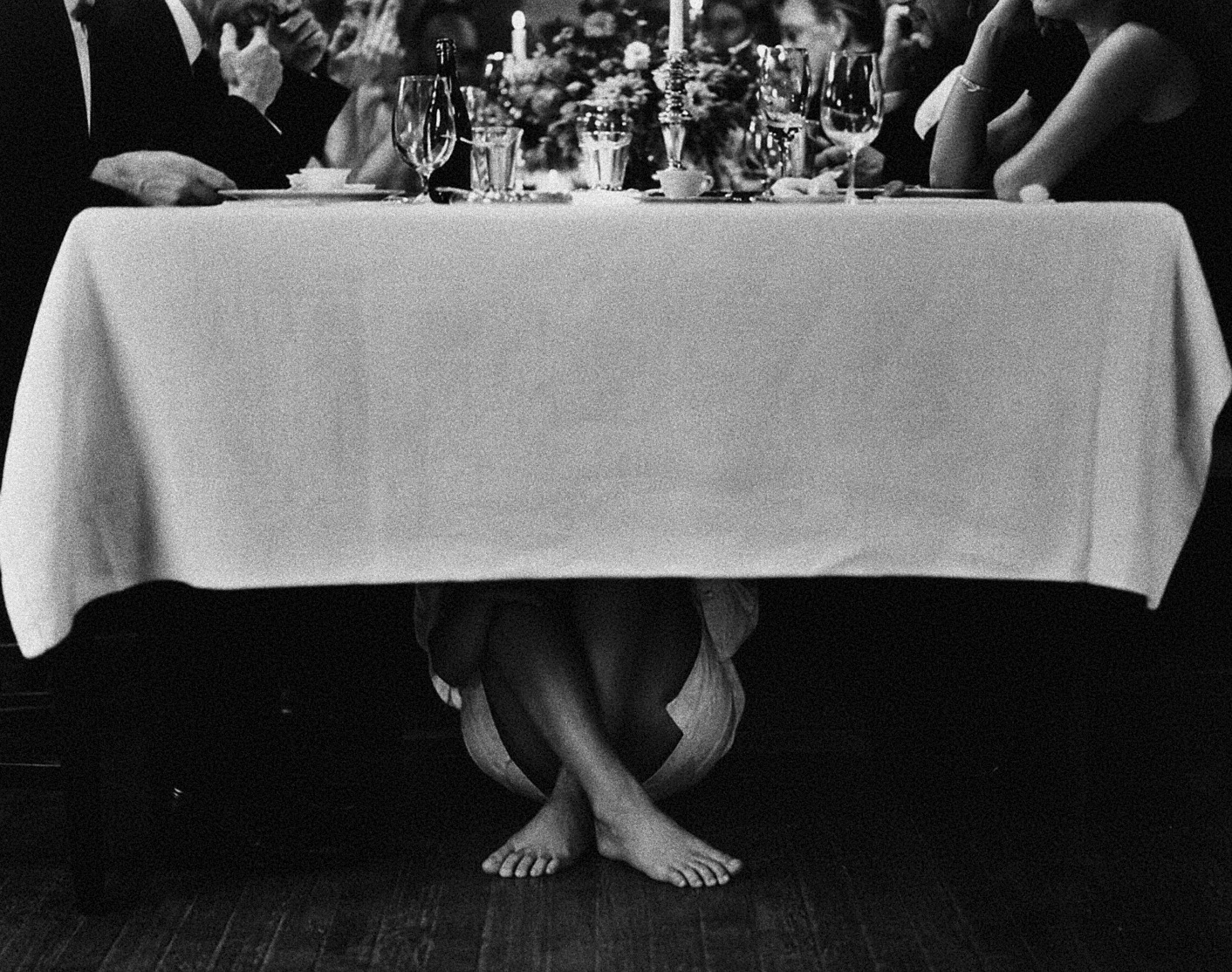
The first question is usually a costume.
It stumbles in asking about logistics, taste, timing, dinner plans, font size, itinerary, “what do you think?”, “does this work?”, “should we?”, “is this good?”
It seems innocent. Polite, even. It uses ‘may’ instead of ‘can.’ Instantly suspicious.
But that first question is rarely what we really wanted to ask. The first question is just the one we are comfortable saying out loud. The real question is like me at every gathering I’ve attended post-pandemic, hiding somewhere, barefoot and scared.
“Where should we go for dinner?” is not always about dinner. Sometimes it is about who has been choosing the restaurant for the last three years. Sometimes it is about whether we still know how to enjoy each other without turning every meal into a tiny performance review with appetizers.
“Do you like this idea?” is rarely about liking the idea. It is about permission. It is about whether the thing is worth keeping alive or deserves an anonymous burial. It is about whether the person asking is hoping you will rescue the promise from the emptiness.
The question beneath the question is the one that carries consequence.
It asks: what is really happening here?
What are we trying not to say?
What would change if we answered honestly?
What are we protecting?
Who are we performing for?
Most first questions are acts of self-defense. They give us somewhere safe to stand. Sure, let’s talk about the budget shortfall that is not my fault, the GPS betrayal, the clueless boss, or the board of, god forbid, pasteurized cheese, because that’s what needs addressing.
But the real question lives closer to the body.
It is not “How do we make this deck better?”
It is “Why should anyone care before we explain how it works?”
It is not “Why do we argue so much?”
It is “What part of ourselves have we mistaken for fact?”
This is why questioning is not a soft skill but architecture. A good question builds the room where the truth can enter.
Bad questions flatten. Good questions reveal.
The bad question asks for a solution before it has earned the problem. It wants the shortcut, the itinerary, the cure. It confuses speed with intelligence, one of our more popular modern illnesses, somewhere between inbox management and ordering shoes at midnight because a newsletter called us “friend.”
The sincere question slows the room just enough to give us a glimpse of what we mean.
Not forever. This is not an invitation to become a professional ponderer, as I learned at the Whitney Biennial while questioning the utility of wall text beside the work. “Why declare intention before interpretation? Is art not first a private collision between object and beholder?” I asked.
To which my friend Melissa offered a most efficient critique: “Or you could be less tiresome.”
Check please!
Still, the right kind of pause is useful, because it prevents us from solving the wrong thing.
Clarity is not the removal of mystery. It is having the discipline to locate the right mystery.
A surprising amount of life is wasted this way: solving the wrong thing with good intention, even great taste.
We optimize the surface. We improve the phrasing. We change the layout. We soften the email. We buy the better notebook, as if the notebook were ever the problem. The sentence gets better; the thought does not.
Clarity is not the removal of mystery. It is having the discipline to locate the right mystery.
When someone asks, “Is this good?”, the lazy answer is yes or no. The more useful answer is: good at what?
Good at impressing people who already agree?
Good at hiding the weakness in the premise?
Good at getting approved?
Good at being remembered?
Good at making someone feel less alone, less stupid, less excluded, less bored with the available version of reality?
The question beneath the question usually changes the unit of measurement.
We stop asking whether something is beautiful and start asking whether the beauty is doing anything useful. We stop asking whether something is clear and start asking whether the clarity is earned or merely blunt. We stop asking whether something is original and start asking whether it opens a new way of seeing.
The first question is often transactional. The second is relational.
What do they want? becomes: what do they need to feel safe enough to want anything?
How do we sell this? becomes: what belief would have to shift before this feels inevitable?
What should we make for dinner? becomes: what should someone remember in their body three days later?
That last one matters. The body is a better archivist than the brain. The brain is vain. It likes explanations, categories, elegant little theories it can repeat at cocktail hour. The body remembers the temperature of a room, the tone of a voice, the silence after a sentence that should not have been said, the way a place either welcomed you or politely informed you that you were merely being tolerated.
Questions that do not reach the body rarely reach the truth.
A real question is not a decorative object.
The first question also tends to protect our preferred identity.
We ask, “How do I make this work?” because “Why am I so attached to this working?” would be irritating. We ask, “How do I win the argument?” because “What would I lose if I understood the other person?” would be annoyingly honest. We ask, “What should I do next?” because “Who am I becoming if I keep choosing this?” turns on the light in the room we’ve kept dark for decades.
This is where questioning becomes uncomfortable, and therefore useful.
It is not a prompt on a retreat worksheet printed in tasteful beige and served with cucumber water. It creates friction, disturbs the status quo, threatens the monarchy of habit.
And yet, it is almost always more useful than a false answer.
False answers are efficient in the beginning and expensive in the end. They let us proceed. They make meetings shorter. They produce names, decks, plans, relationships, renovations, and entire lives that look convincing at first. But inside, something is misaligned. The form is not serving the meaning. The answer is technically correct but emotionally useless.
There is a temptation to treat the deeper question as a luxury. Something to ask when there is time, when the kids allow, when everyone has slept, when the world has stopped producing urgent nonsense.
But the deeper question is not extra. It saves time because it saves us from building monuments to misdiagnosis.
The doctor who only treats the cough may miss the architecture of the illness. The strategist who only answers the brief may miss the fear that wrote it. The friend who only responds to the complaint may miss the grief wearing the complaint as a hat.
Most of us are not lying when we ask the first question. We are simply starting where we can. The first question is a handle. We grab it because the real thing is too large, too shapeless, or too scary.
So the work is not to shame the first question. The work is to listen through it.
Let it speak. Let it make its case. Then peek around to see what is hiding behind it.
Because beneath every operational question is usually an emotional one. Beneath every aesthetic question is usually an ethical one. Beneath every strategic question is usually a human one. Beneath every “what should we do?” is some version of “what matters to us?”
This is true in work. It is true in love. It is true in travel, art, friendship, parenting, arguments, and whatever we are calling culture this week because “everyone is tired” did not test well as a positioning statement.
The first question opens the conversation.
The second question earns it.
And somewhere under that, if we are patient but not indulgent, precise but not bloodless, honest but not theatrical, we may find the real one.
The one that does not ask us to sound smart.
The one that asks us to become more awake.